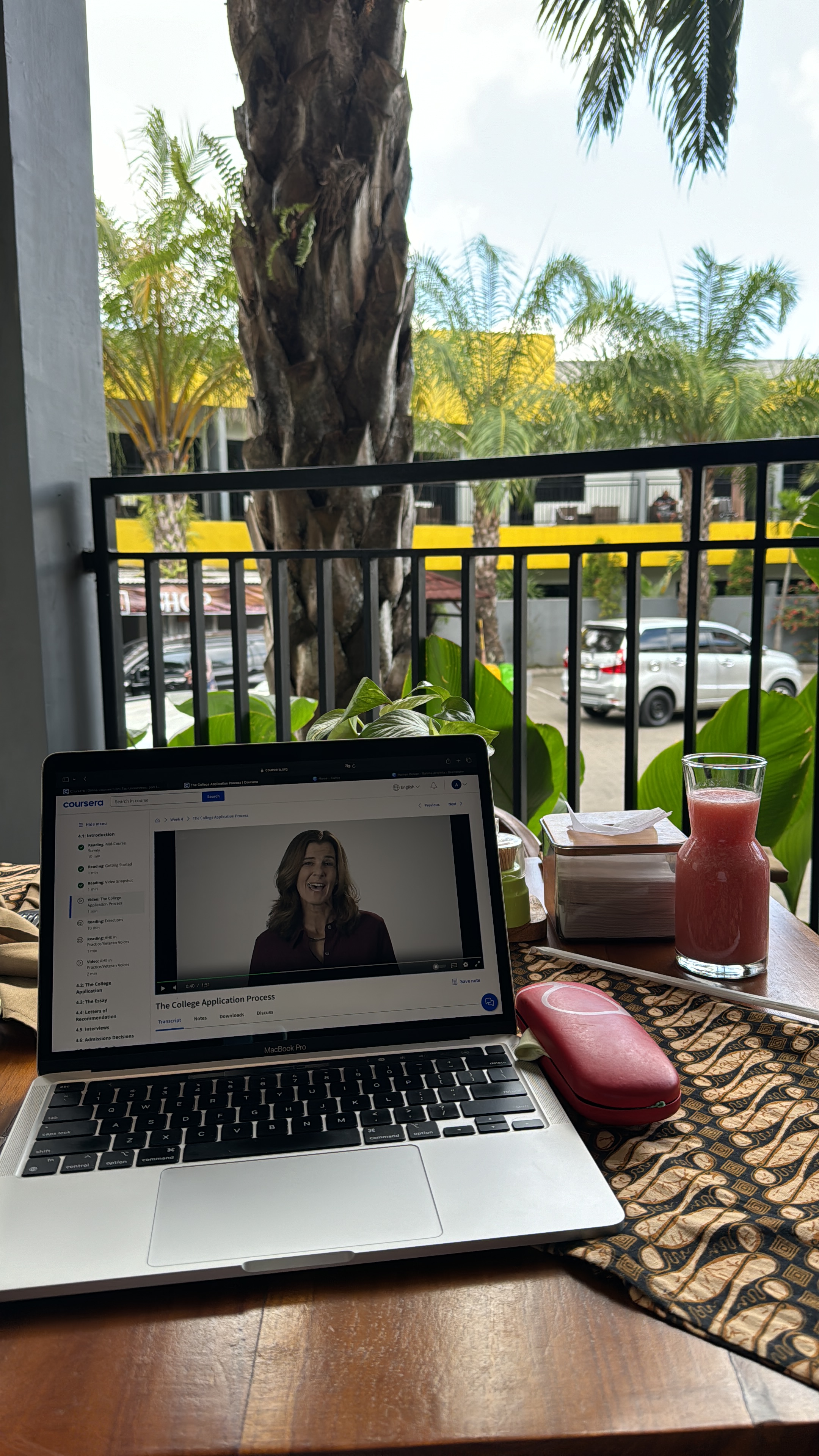
There is a particular silence that follows a resignation. It is not the silence of emptiness, but of space—a vast, open field where the familiar noise of routine once stood. I know this silence well. I resigned in 2019, leaving behind a career in the education industry that I had embarked on since 1999, to become a full-time housewife and embrace a nomadic life alongside my husband. It was a decision that felt both terrifying and necessary.
If you are reading this, perhaps you are standing at a similar crossroads. You have handed in your notice, or you are on the verge of doing so. You know the what—you are leaving. But now the question that echoes in that quiet space is a far more complex one: what’s next? Let’s talk about that. Not just how to start, but what to start, and most importantly, why you have to start at all.
The most successful transitions aren’t built on sudden leaps but on quiet preparation before you resign. Rather than quitting first, validate your idea while still in your current role—engage potential customers, test the waters, and refine your plan. This isn’t about staying stuck; it’s about building a bridge so that when you finally step off the ledge, you land on a path, not into an abyss.
Once you’ve taken the quiet leap, resist the urge to do everything at once—start with structure, not chaos.
Begin with a plan, not panic: audit your finances and create a runway to give yourself breathing room.
Then move into exploration—read, network, volunteer, take a class.
This is your chance to rebuild identity and purpose, piece by piece, without the suffocating pressure of immediate survival.
Here’s the thing I wish I’d known earlier: just start from where you are, with what you’ve got, and what you’re already good at. We waste so much time waiting for perfect conditions or a better version of ourselves, but that version never shows up.
The quiet leap isn’t about becoming someone new—it’s about letting the person you already are step up. Your messy current reality isn’t an obstacle; it’s your raw material. That old laptop, that half-written draft, those years of experience, that skill people always come to you for—it’s all enough. You don’t need a grand overhaul. You just need to trust that where you are right now is a perfectly good place to begin.
When you start from where you are, you stop waiting around for some perfect future version of yourself that never shows up. When you work with what you’ve got, you realize scarcity is mostly just an excuse we tell ourselves to stay stuck. And when you lean into what you’re naturally good at, you stop swimming against the current and start flowing with it. That’s not just practical—it’s freeing. It’s where fulfillment and excellence actually happen, right here, with exactly who you are right now.
Alright, here’s the bottom line: quitting isn’t really quitting—it’s you finally taking the wheel.
When you leave a job, you’re not just walking away; you’re saying you’re done being a passenger in your own life.
You’re deciding to be the one who figures out what grows in your garden. But here’s the catch—if you resign and don’t start anything new, you haven’t really moved forward. You’ve just created an empty space. And empty spaces don’t lead anywhere.
So yeah, you have to start. Not because it’s easy, but because it’s the only way to actually live out that choice you made. It doesn’t have to be huge—maybe it’s a morning journal, maybe it’s testing a business idea, maybe it’s just finally giving yourself permission to explore what lights you up. That whole Ikigai thing? It’s not some distant mountaintop—it’s found in the small, messy steps you take every day. The journey begins when you do. So stop overthinking, stop waiting for the perfect moment, and just take that one small step forward. That’s it. That’s the whole secret.
Attraversiamo!